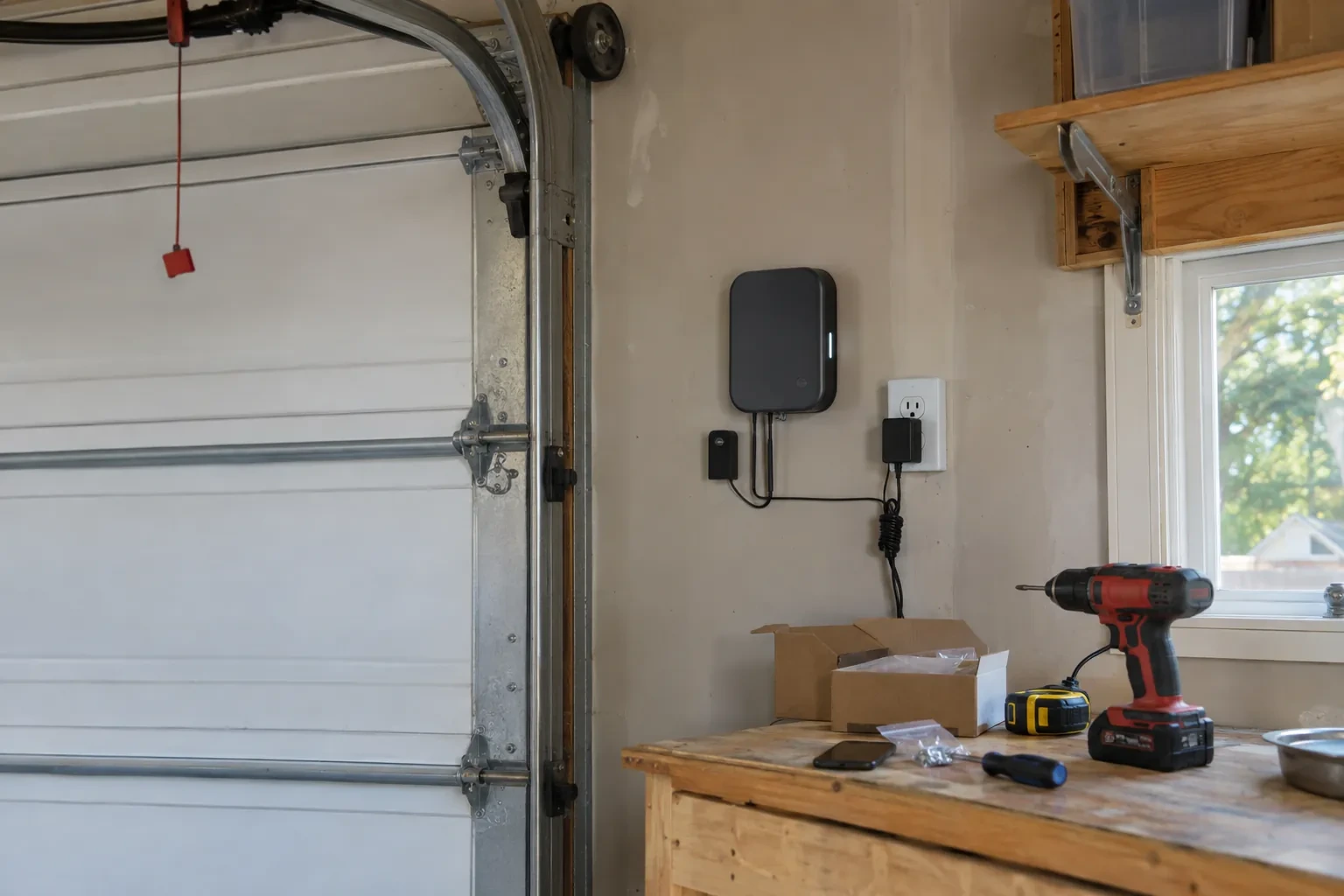
Book soon Openers · Uxbridge
Emergency Release Repair in Uxbridge
Someone pulled the cord last spring to get a car out during an outage, and the door has never properly rejoined the opener. Press the button and the trolley glides along the rail by itself while the door stays exactly where it is.
Call now · open 24/7(289) 212-8396Right now
Before the door is looked at
Call (289) 212-8396, open 24/7.
Pull the release with the door fully closed whenever possible, and keep the opening clear as you do. Once the trolley lets go, the door is held by its springs alone, and a closed door can still shift unexpectedly.
Lift a door by its handles or the gripping points on the panel face, never at the joint between sections, which closes as the door bends around the track.
Never drive a vehicle at a closed door to get out; the door collapses and the stored tension in the counterbalance is released. Use the release, the outside key release, or a technician.
In plain words
Most households meet the release for the first time in a power outage, usually in winter. The door is shut, the car is inside, and the red handle is the only way to move the door. This service makes that moment go smoothly: a handle that hangs where a person can reach it, a cord strong enough to throw the lever, a trolley that lets go cleanly, and a door that lifts without a fight once it is free. The technician also shows everyone in the house the sequence, including how to hold the trolley out for a few days of manual use and how to reconnect afterwards.
How the visit goesThe power went out in the middle of an ice storm, the car is inside, and when you reach up for the red handle there is nothing there. A frayed stub of cord hangs from the trolley, well above your fingertips, and the door sits shut.
Emergency Release Repair · Uxbridge
How the visit goes
- 1
Where the handle hangs
Height and position are measured, not guessed. The handle should hang no more than about 1.8 metres above the floor so a person standing on the slab can reach it, and it should clear the roof and antenna of the vehicle parked beneath. The technician also looks at what surrounds it: shelving, bikes on hooks, a storage loft, a cord tied up around the rail by a previous owner. A handle nobody can find in the dark is as good as no handle at all, so obstructions and a cord that was shortened after a door change are recorded as part of the fault, not as clutter.
- 2
Door work first when the balance test fails
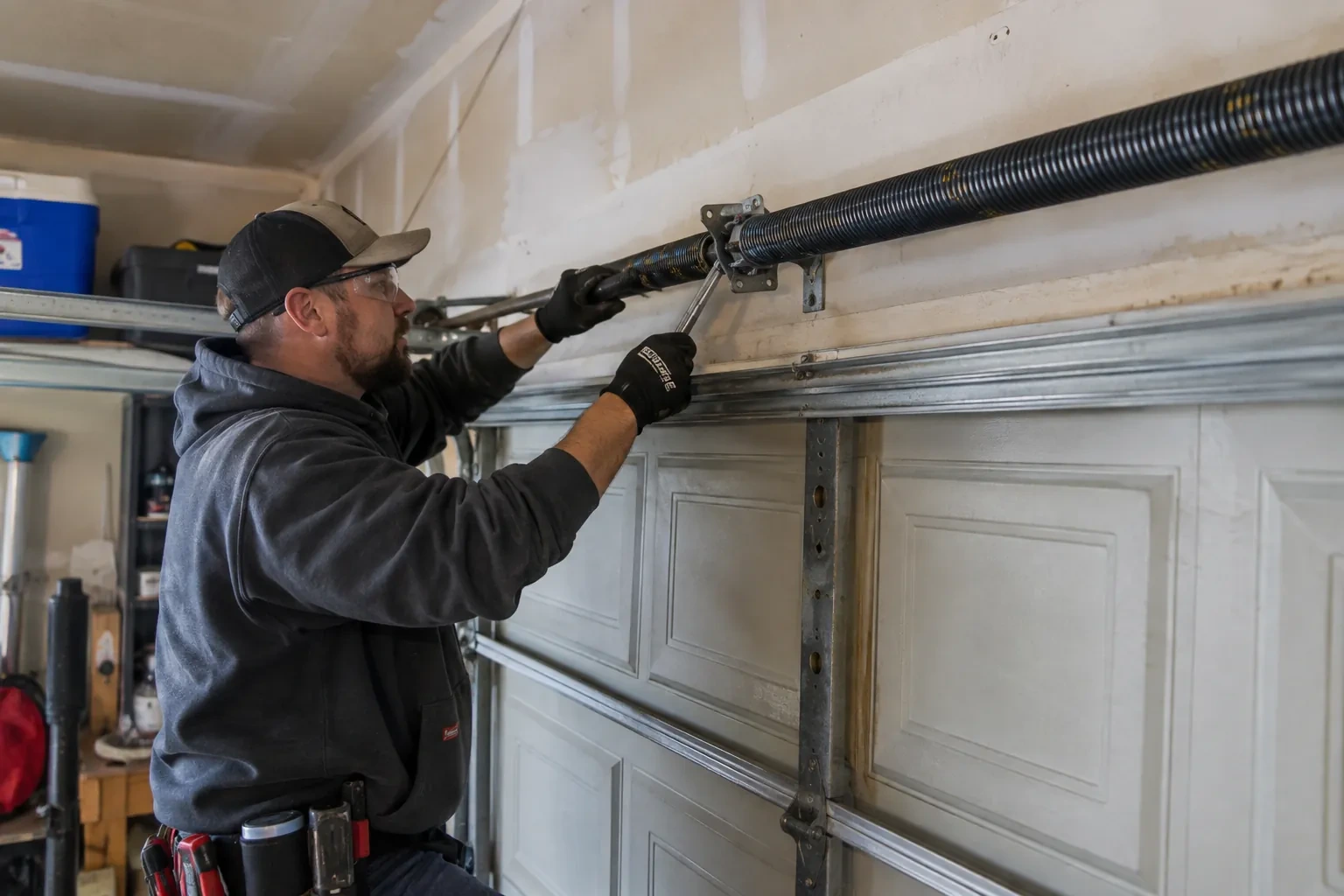
When the disconnected door proves heavy, drifts or binds, the technician changes the order of the visit. The opener stays disconnected, and the door side is put right first: springs re-tensioned or replaced with winding bars by a technician trained for tensioned hardware, frayed cables replaced, dry rollers and hinges lubricated, a bent track straightened. Only when the door lifts and holds by hand is the release work finished and the trolley reconnected. This keeps the release honest: it is meant to hand you a door you can move, and it can only do that once the springs are carrying the weight.
- 3
Through the winter
A release serviced in autumn is set up for the season the household is most likely to need it. The cord is rope that stays supple in the cold, the outside cylinder has been cleaned and lubricated, and the door has been proven to lift by hand with the bottom seal freed rather than frozen. Keep snow and ice cleared from the threshold so a manual lift is not working against a seal stuck to the slab, and keep the slide bolt or manual lock handy for nights when the door is in manual mode. A door that moves by hand is a door that gets you out.
In the van
- Dry lock lubricant and de-icer
- Door arm, clevis pins and clips
- Garage door lubricant
- Rope and red handle kit
- 2x4 offcut for the reversal test
What affects the quote
- 1
Travel and tension reset
Where the trolley was freed or swapped, the chain or belt is re-tensioned and the travel limits are reset, then the reversal tests repeated. That setup time is part of the job and shown as such.
- 2
Ceiling height and access
A standard garage puts the trolley in easy reach from a step ladder. High ceilings, a storage loft, a high-lift track or a car that cannot be moved add setup time.
- 3
Freeing versus replacing the trolley
A trolley jammed on the stop bolt is freed, adjusted and reused when its latch is sound. One with worn teeth or a cracked body is replaced, which changes both parts and labour.
Same fees day, night or weekend.
Emergency Release Repair: questions
What exactly is the emergency release on a garage door opener?
It is the manual disconnect between the opener and the door: a red handle on a cord below the rail, connected to a lever on the trolley. Pull it and the trolley lets go of the door so you can move the door by hand, for instance during a power outage. Push the lever back, or run the opener, and the two reconnect. It is required on residential openers, coloured red so it stands out from everything else overhead.
Why does the trolley run but never reconnect to the door?
Three usual causes. On many rails, pulling the cord back toward the opener deliberately holds the lever out for a spell of manual use, and someone forgot to return it. Or the trolley latch teeth or the release arm are worn or bent, so the two parts pass without catching. Or the carriage sits at the wrong point for the powered trolley to meet, since reconnecting is meant to happen during an opener cycle, not by pushing the door shut by hand. Each is a short fix once identified.
My car is trapped inside and I have an appointment. Can I just push the door open?
Better not. A door forced against a jammed trolley or a locked door can bend the arm, the top section or the track, and a vehicle driven at a door releases the stored tension in the springs. The release is the tool for this moment: with the door closed, pull the handle and lift the door by its handle. If the handle is missing or the trolley will not let go, a technician can reach the lever and have the door moving by hand.
Openers & Access
Bigger photo, sooner job: Emergency Book soon Plan ahead
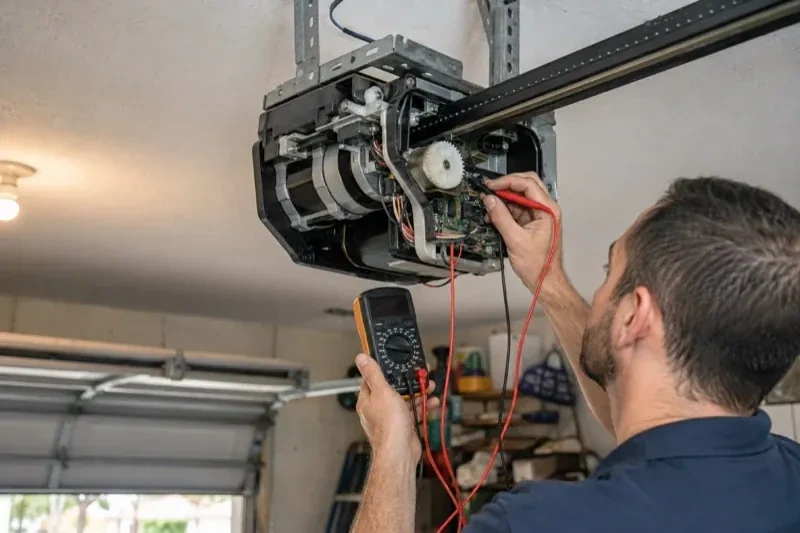 Book soonGarage Door Opener Diagnosis and RepairThe motor runs, the chain rattles along the rail, and the door does not move a millimetre.
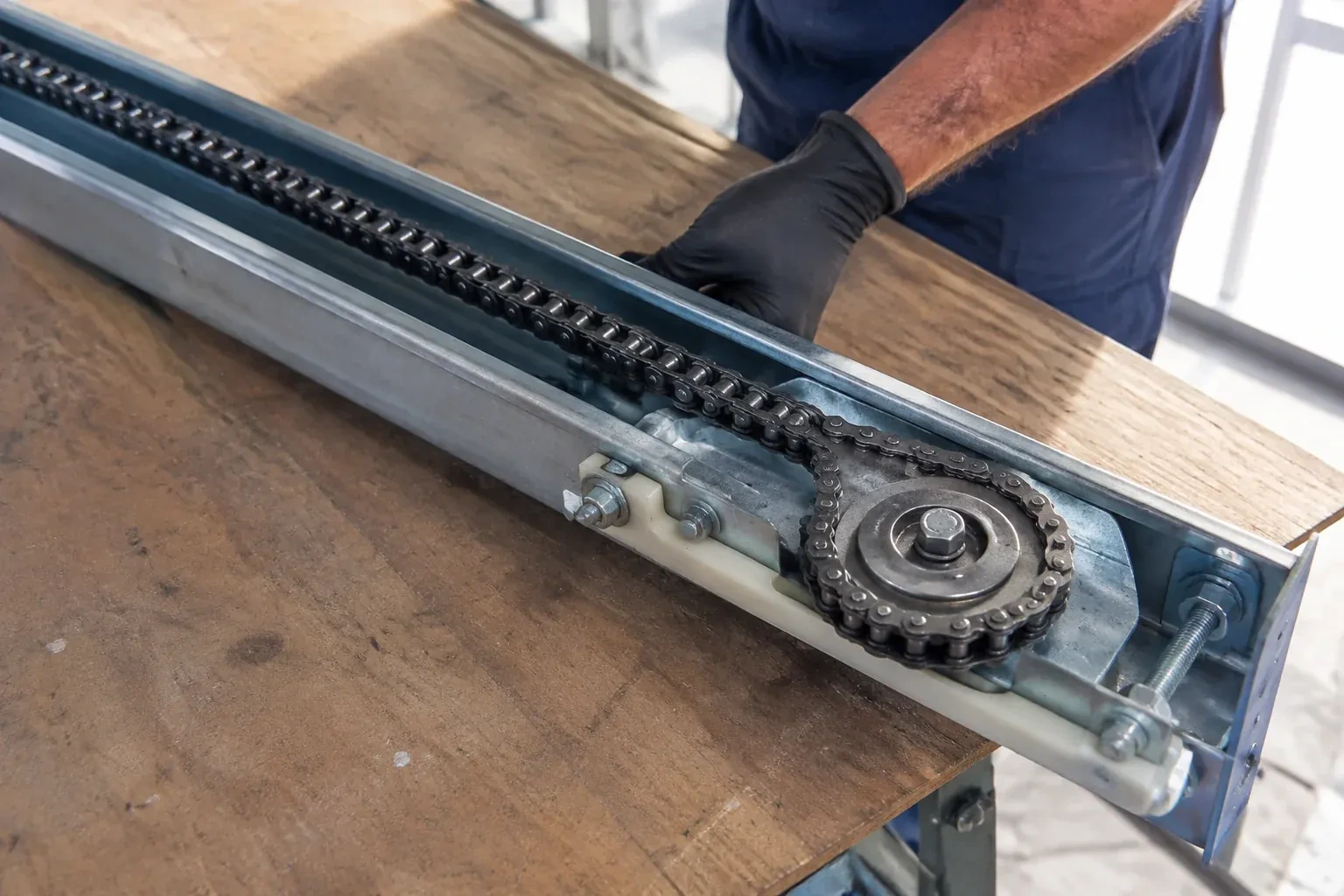 Book soonChain-Drive Opener RepairThe motor runs, you can hear it working, but the door never moves.
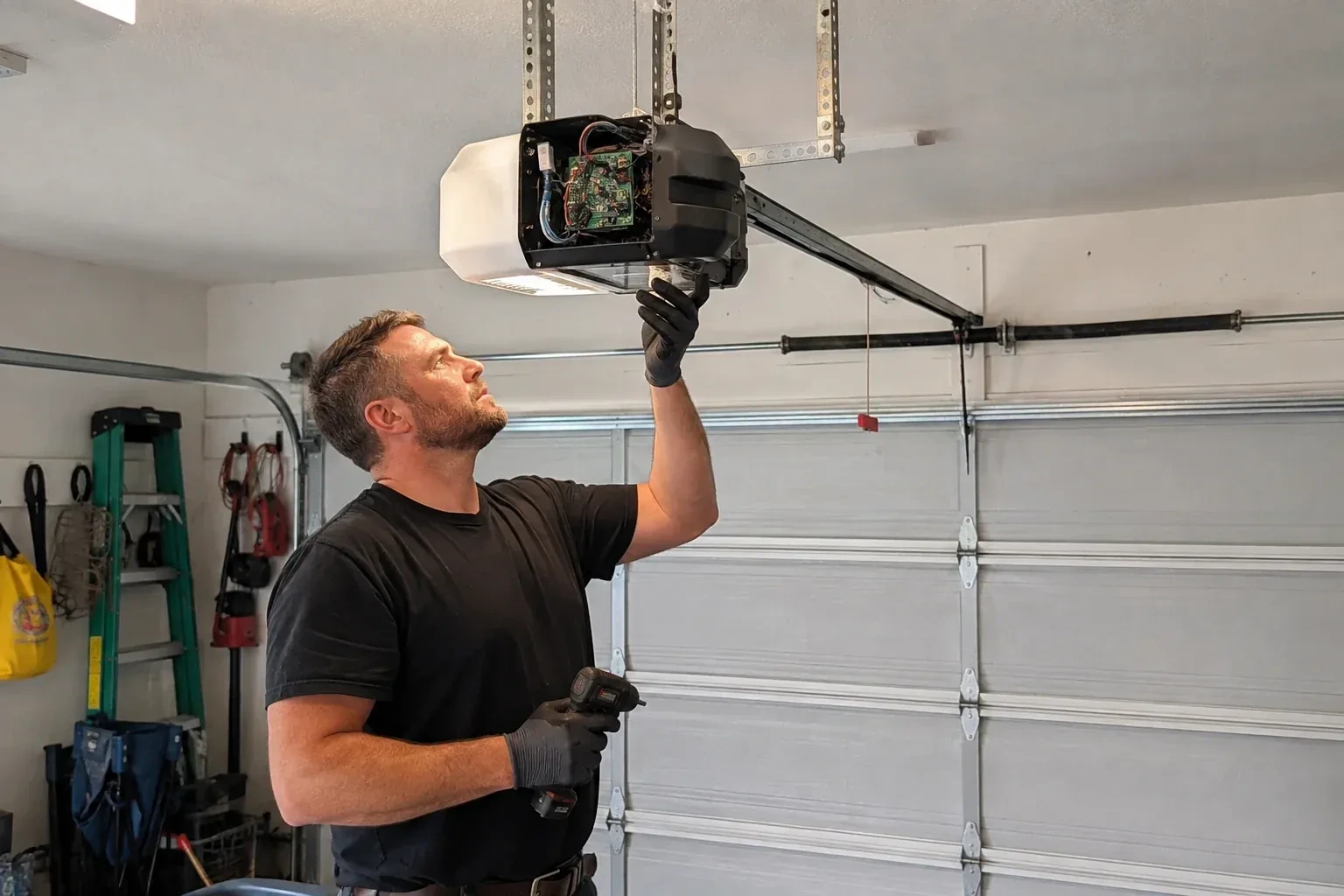 Book soonBelt-Drive Opener RepairAfter the power came back you pulled the red cord to get the car out.
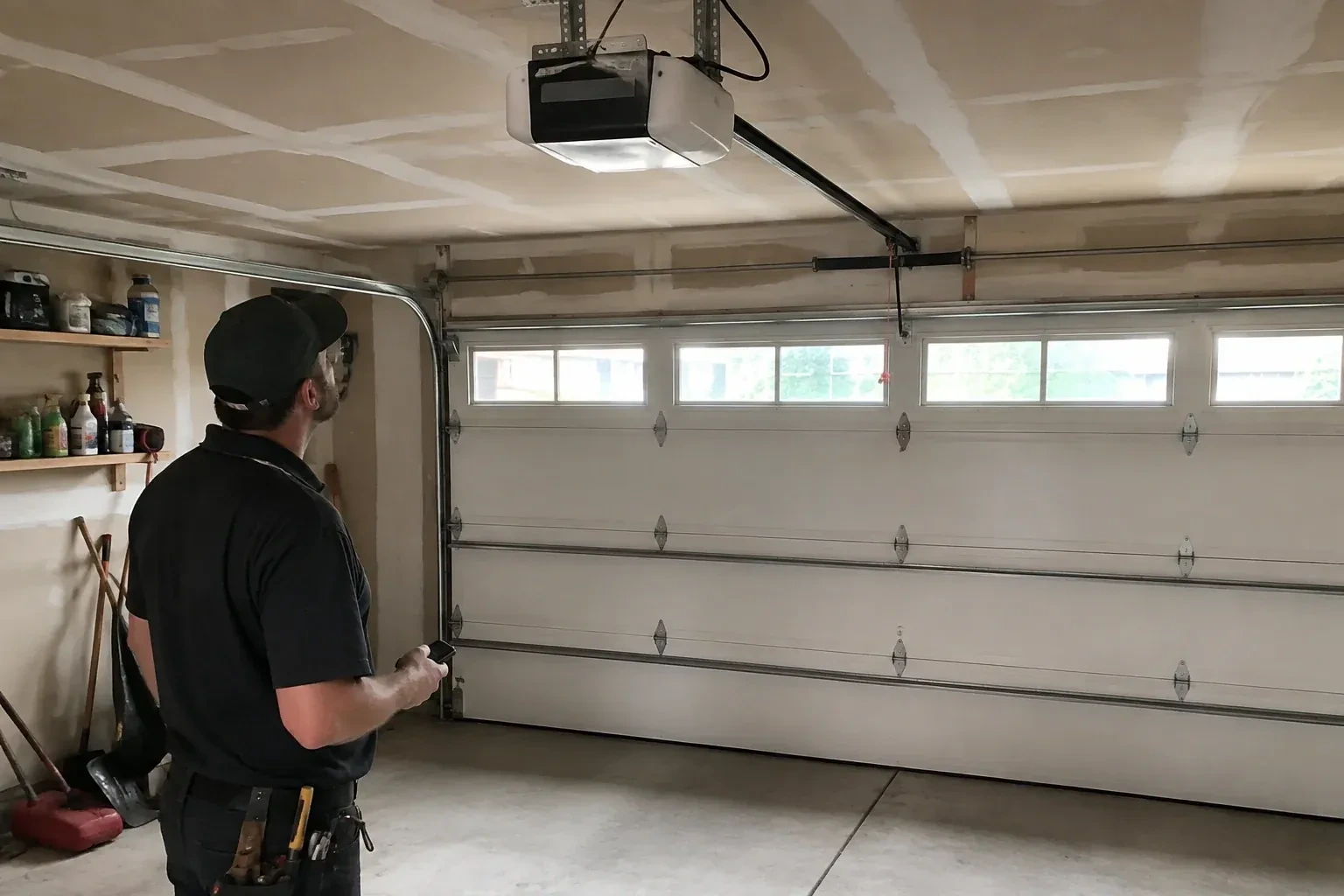 Plan aheadGarage Door Opener Replacement
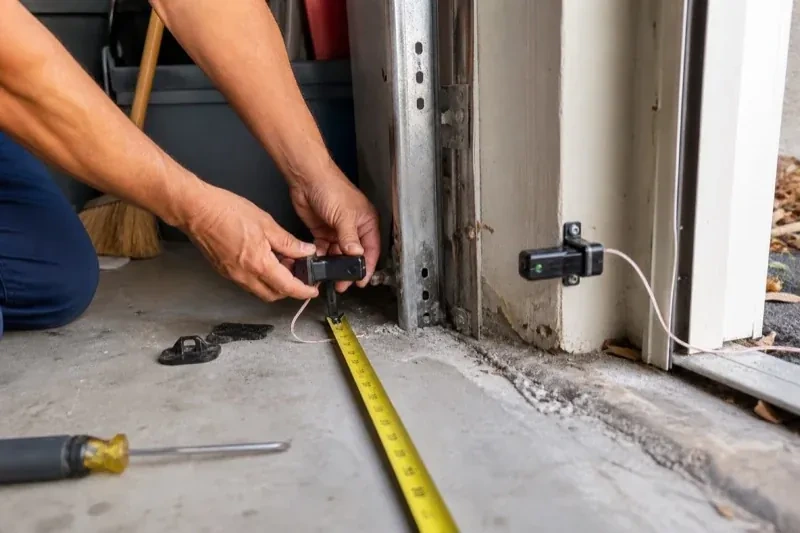 Book soonPhoto-Eye Sensor Alignment or ReplacementThe door will only go down while a finger stays on the wall button; let go and it stops or reverses.
Durham, Ontario
Uxbridge information
- Town
- Uxbridge, Durham, Ontario
- In business
- 18 years
- Hours
- Open 24/7 · nights, weekends and holidays, same fees
- Phone
- (289) 212-8396
- Visits
- On-site assessment preferred. Request a visit or call.
What the census means at the door
42%
Homes of every age. About 42% of homes in Uxbridge were built in 1980 or earlier, according to the 2021 Census.
A blend of older and newer homes usually means a blend of expectations too: keeping an original door running as long as sensible, or bringing a builder-grade door up to a quieter standard. Both are worthwhile, and the choice is explained at the door with the options side by side.
81%
Mostly houses. Single-detached houses make up about 81% of homes in Uxbridge (2021 Census).
In neighbourhoods of detached homes the garage door usually faces the street and takes up much of the front of the house, so its condition shapes how the whole property looks. A straight, quiet, well-finished door is as much a part of the curb appeal as the front door.
Open 24/7
Request a visit
Someone pulled the cord last spring to get a car out during an outage, and the door has never properly rejoined the opener.
Call now · open 24/7(289) 212-8396- On-site assessment preferred
- Same fees day, night or weekend
- 18 years in business